Reduce Home Humidity with HVAC Tips and Solutions
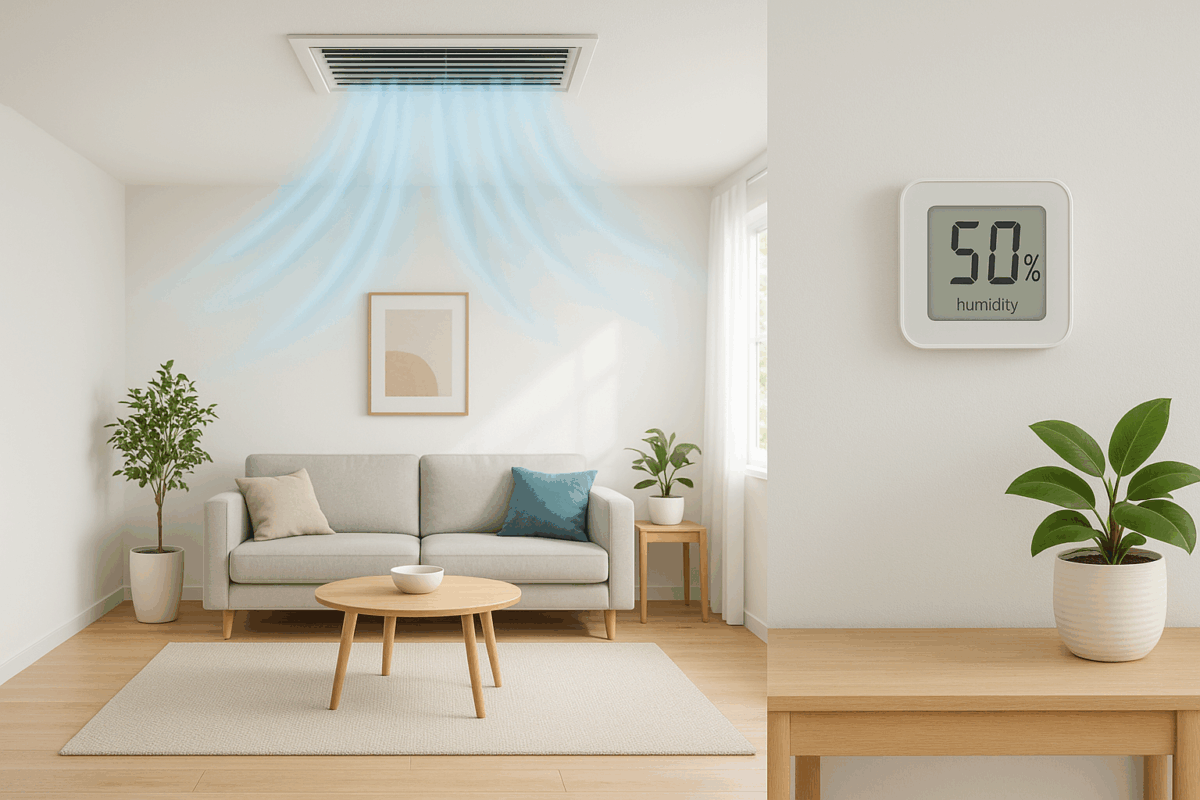
Humidity inside your home can sneak up and quickly reduce comfort. It can also encourage mold, ruin woodwork, and encourage dust mites. Managing moisture helps you breathe easier, keeps your home’s structure in good shape, and helps you avoid musty odors or sticky feelings. Your HVAC system is a key tool in this fight. By making smart settings changes, getting add-ons, maintaining equipment, and balancing ventilation, you’ll find it easier to keep indoor air fresh and at a healthy humidity. In this article, you’ll learn how to use your HVAC system for better dehumidification. You’ll get tips that lower indoor moisture all year in any climate.
Understanding Home Humidity and Its Impact
Too much humidity inside does more than just make the air feel muggy. High indoor moisture attacks your comfort first. Sweat sticks to your skin and you feel perpetually clammy. Air conditioning will struggle to do its job because humid air holds heat. Then you get a chilly but still sticky feeling, which often prompts people to lower the thermostat, wasting energy without really fixing the problem.
Left unchecked, high humidity becomes a risk to your home’s structure. Moisture seeps into drywall, framing, and attic spaces, feeding mold and mildew. Over time, wood swells or rots, paint peels, and metal rusts. Homeowners often see fogging windows, warped floors, or wet spots on walls and ceilings. All these signs mean too much moisture is hiding in the air and behind surfaces.
Health never escapes the effects of excess humidity either. Mold and dust mites thrive in humid homes, triggering allergies, asthma, and respiratory irritation. Bacteria multiply faster. That persistent “damp basement” smell is simply airborne mold or mildew spores. Maintaining balanced humidity keeps these hazards under control.
Your HVAC system is your main defense against these problems. All air conditioning removes some moisture during the cooling process, but managing the system properly and supplementing it with dehumidification tools when needed makes all the difference. Let’s look at how to spot signs that your home may have a humidity problem and how your HVAC system is working for or against you.
Signs Your HVAC Isn’t Dehumidifying Well
If your home feels muggy even with the air conditioning running, or you notice persistent condensation on windows and mirrors, your HVAC system might be struggling to manage humidity. When surface mold appears on walls or ceilings even in air-conditioned rooms, moisture is not getting removed efficiently. Lingering musty odors despite open windows or working fans are another signal that air is staying too damp. Unusual increases in allergy or asthma symptoms inside the home point in the same direction. Finally, if your wood floors or doors begin to swell, stick, or warp, then indoor moisture has gone far beyond healthy levels. Your system may need a settings check, a deeper maintenance routine, or perhaps better humidity controls added to it.
Setting HVAC Fan to the Right Mode for Home Humidity
The way your HVAC fan operates directly affects how much moisture your system removes from the air. Many homeowners set the fan to the “On” position, thinking continuous operation is best. However, when the fan runs most of the time, moisture that collected on the coil during cooling gets blown back into the air instead of being drained away. This keeps your home more humid than it should be.
Switching your HVAC fan to “Auto” is one of the simplest tricks to reduce home humidity. In “Auto,” the fan only runs during a cooling cycle, so as soon as the AC stops blowing cold air, the coil has time to drip accumulated water into the drain pan and out of the house. The system works as intended, pulling water out of your home instead of recycling it back into your rooms. If you feel air isn’t moving enough, ceiling fans are a better option once the AC has stopped running. They create better comfort without raising humidity.
Integrating Whole-House Dehumidifiers
Standard air conditioners remove moisture, but in many climates or seasons, they cannot keep up with the demand. Sometimes, using the cooling just to dry the air makes your house too cold for comfort. This is where a whole-house dehumidifier comes in. These units hook into your HVAC ductwork and actively strip moisture from the air moving through your system. They work alongside your AC or furnace, running when needed, not just when the AC is cooling.
Whole-house dehumidifiers have the power to protect all rooms and spaces, not just the ones near portable units. By drying the air before it circulates into bedrooms, living areas, and throughout the duct system, you maintain stable and comfortable humidity even during heavy summer rains or in humid regions. As a bonus, when indoor air is drier, your AC system doesn’t have to work as hard, leading to lower utility bills and less wear and tear. Many homeowners are surprised by the energy savings earned this way.
If you already feel that your HVAC system works too often but the house still feels sticky, or if mold and mildew are consistent problems, ask your technician if your system could benefit from a dehumidifier add-on. Whole-home units are more effective than portable machines and don’t require you to constantly empty water tanks. Proper sizing and installation mean the unit dries your air without overworking your main heating and cooling equipment.
Routine HVAC Maintenance for Better Moisture Control
Every HVAC system needs care to maintain humidity control. When the AC filter clogs, air can barely move through the system, which reduces both cooling and moisture removal. Filters choked with dust, pet dander, or seasonal pollen should be changed or cleaned at least every one to three months. Skip this chore and the system simply cannot dehumidify effectively.
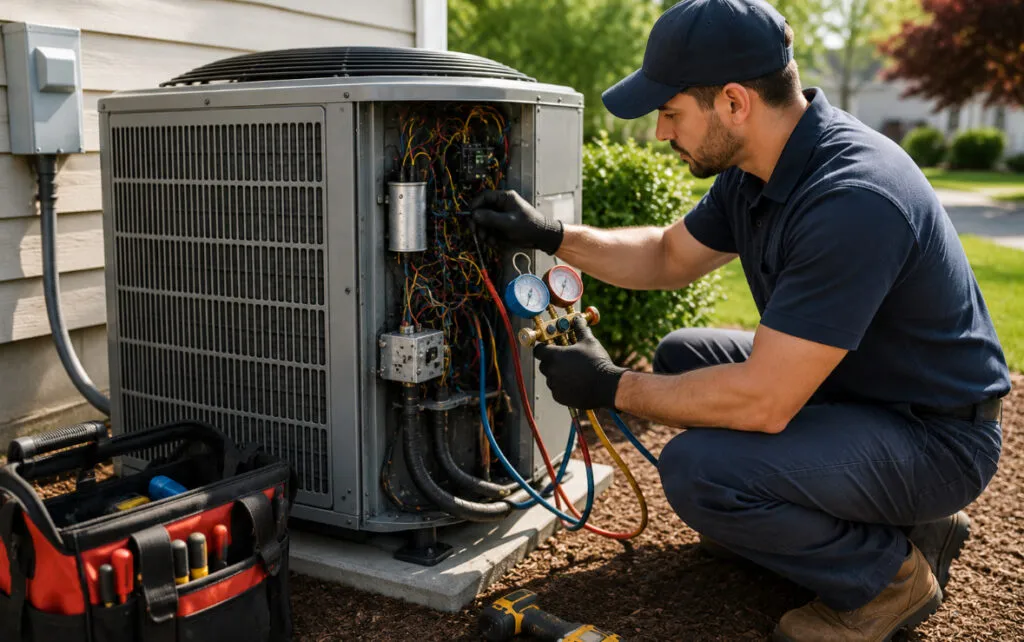
Coils inside your air handler or outdoor condensing unit collect dust and grime over time. When coils are dirty, condensation forms unevenly or not at all, so less water ends up draining outside. A trained technician should clean these coils as part of an annual tune-up. Keeping refrigerant at the right level also matters; too little refrigerant means less efficient cooling and much weaker dehumidification.
Don’t forget the drain lines and drip pans. These should stay free of clogs or algae growth, or water will back up, pool, and even lead to leaks, not to mention adding moisture back to indoor air. Regular service visits help catch early problems. Technicians can spot worn parts, loose connections, blocked vents, or shorts in the control system that could lead to poor humidity management down the line.
Maximizing Exhaust Fans and Ventilation
Even the best HVAC system benefits from focused moisture control in kitchens, bathrooms, and laundry rooms. These “wet zones” produce huge spikes in humidity, especially during showers, cooking, or running appliances. Exhaust fans draw out damp air and direct it outside, keeping humidity from accumulating inside the house. Every time you cook or shower, turn on the nearby exhaust fan until steam and moisture are completely cleared. Bathroom fans should run for at least 20 minutes post-shower. In kitchens, check that the range hood vents to the exterior, not just recirculating air. Laundry spaces benefit from dryer vents maintained for a tight seal to the outside. Good ventilation in these rooms keeps the rest of your house drier, which translates to less burden on your main cooling and dehumidification systems.
Sealing Air Leaks and Insulating Your Home
Managing humidity is as much about keeping wet outside air from sneaking into your home as it is about drying what’s inside. Air leaks around windows, doors, attic openings, and uninsulated ductwork all provide entry points for outside moisture. The result is cool, damp drafts that not only undermine your comfort but also make your HVAC system work harder. Moist air entering through tiny gaps can drive up humidity in parts of your home that rarely get direct air conditioning, like closets or basements.
Caulk and weatherstrip around all potential gaps, especially older windows or door frames. Add insulation in attics, crawl spaces, and exterior walls where moisture often collects. Don’t forget the ductwork: poorly sealed ducts in unconditioned spaces pull humidity inside, lowering your system’s overall efficiency and encouraging condensation that can lead to mold. When your building envelope is tight, you gain more control over how much moisture enters or leaves your living areas, and your HVAC system works much more efficiently when it is not fighting leaks or wild temperature swings.
Monitoring Indoor Humidity for Better Control
Knowledge is power. Monitoring is the final piece to keeping your home at healthy humidity all year. A simple, affordable hygrometer will accurately show your indoor humidity percentage in real time. Aim for a range between 40 and 60 percent. Above 60 percent means the air feels muggy, mold grows more rapidly, and your AC works too hard. Below 40 percent, wood and furniture can shrink, noses and throats might feel dry, and static becomes a problem.
Place a hygrometer in several rooms, especially those prone to moisture. Living rooms, bedrooms, and basements are all good candidates. Notice how readings change as the weather shifts or when you cook, shower, and do laundry. If numbers stay too high, double check your HVAC settings, inspect fan operation, and see if more ventilation is needed. Consider calling a technician to check the system or review your options for adding a dehumidifier if your humidity stays too high, even with adjustments.
Additional Techniques for Home Humidity Management
Beyond using your HVAC system to manage humidity, a handful of other techniques help keep moisture levels under control. Keep indoor doors open whenever possible to promote even circulation, so no single room develops moisture buildup. Dry laundry outdoors or use machines that vent fully to the outside. Avoid overwatering houseplants. If your climate allows, open windows on drier days while keeping a careful eye on your hygrometer.
Rugs and carpet trap moisture, so regular vacuuming and occasional cleaning help keep mold away. Basements and crawl spaces often need attention. Use vapor barriers or portable dehumidifiers if your HVAC setup cannot cover these remote areas. If your house is shaded or surrounded by dense landscaping, trim foliage away from foundation walls so exterior air gets a chance to dry before entering your home.
How Professional HVAC Service Helps Prevent Humidity Issues
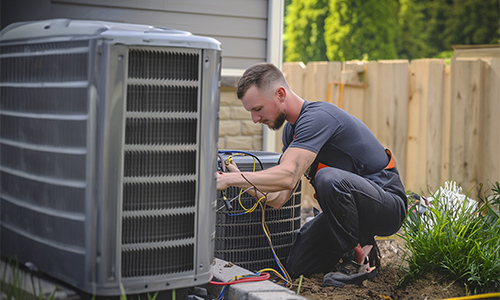
A trained HVAC professional does more than fix broken parts. Comprehensive seasonal inspections catch many of the small issues that lead to high humidity indoors. During a visit, a technician will check your air filters, refrigerant levels, and all critical components. They will also look at your ductwork, confirm that fans and blowers operate as designed, and ensure the drain system channels water out safely. If your current setup struggles with humidity control, a professional can review your options for system upgrades, new dehumidifier units, or smart thermostats that help adjust cycles more effectively.
Choosing a company with a track record of trust and skill, like Livin On Mechanical, means your system will maintain the comfort and protection you expect throughout the year. Recent innovations also make energy efficient solutions available for many older homes, so don’t settle for uncomfortable air just because your house is a few decades old.
Conclusion: Consistent Comfort Starts with the Right System Choices
Managing humidity in your home is key for true comfort, preserving the health of your home, and protecting your family’s wellbeing. Your HVAC system is the backbone of this effort. Smart settings, regular care, proper sealing, and the right accessories all work together. When you pay attention to these factors and consult experts for annual tune ups, your house won’t just feel better in any season. You’ll also save money, avoid mold, and breathe easy. The investment of time and focus today pays off for years down the road. If you’re unsure about your current system or want to learn about the best upgrades for your home, reach out to a trusted HVAC professional who specializes in indoor air quality solutions. You deserve clean, balanced air in every room, every day.